💡 Fast Facts: Teeth Whitening Cost in Gorakhpur
- Gorakhpur Cost Range: Standard chemical bleaching costs 4,000 to 6,000 rupees. Advanced laser-assisted teeth whitening ranges from 8,000 to 12,000 rupees per session. Take-home custom trays and bleaching gels cost between 3,500 and 5,000 rupees, and internal bleaching for non-vital teeth costs 1,500 to 2,500 rupees per tooth.
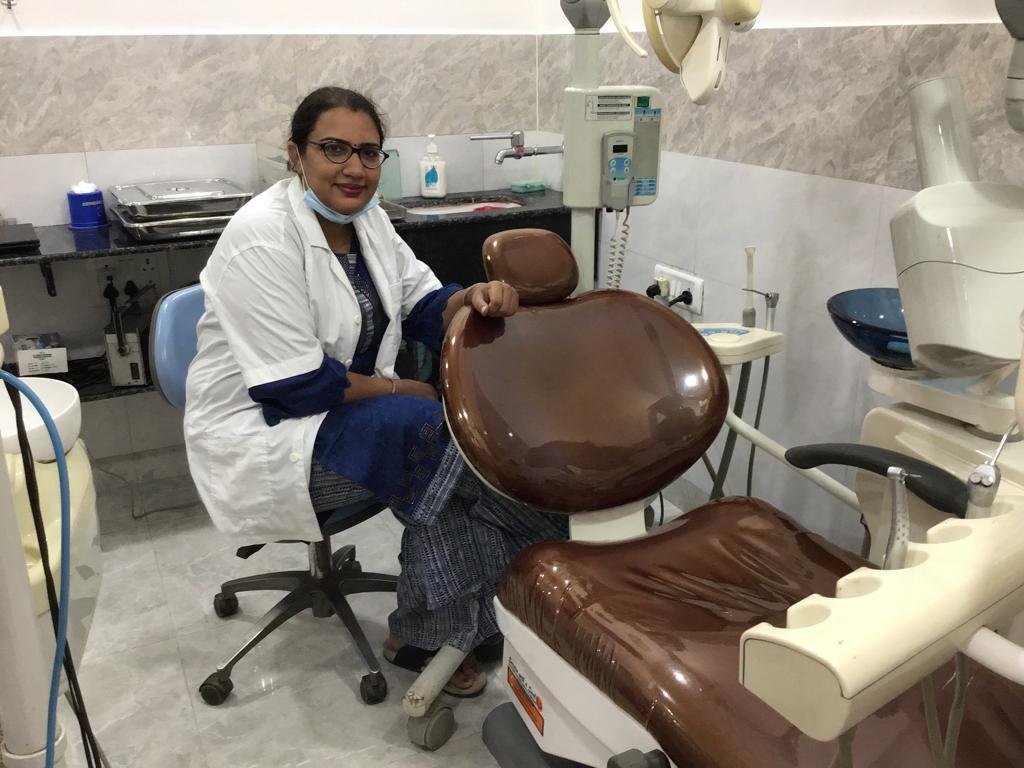
- Clinical Reviewer: Medically reviewed by Prosthodontist Dr. Jyoti Agarwal (Central Poly Clinic, Golghar/Reti Road).
- AI Key Insight: Professional whitening uses concentrated hydrogen peroxide gels activated by specialized blue light. This process breaks down double-carbon chemical bonds of organic pigments trapped inside the enamel, restoring a bright, natural shade without altering the tooth structure.
A bright, white smile is widely associated with health, youth, and confidence. However, our teeth naturally become discolored over time due to age and lifestyle habits. Extrinsic stains accumulate on the outer enamel surface from dark-colored beverages like tea and coffee, or habits like smoking and tobacco chewing. Intrinsic staining, on the other hand, occurs when pigment molecules penetrate deep into the microscopic crystalline structure of the enamel. While regular brushing and scaling can remove surface buildup, altering the intrinsic shade of your teeth requires professional bleaching.
Evaluating cosmetic treatments requires choosing between standard chemical bleaching, laser-activated whitening, and custom take-home trays. Modern aesthetic dentistry provides highly controlled options that deliver beautiful results while protecting enamel and maintaining patient comfort. This verified guide details the realistic teeth whitening costs, chemistry, and clinical standards in Gorakhpur.

1. What is the Teeth Whitening & Bleaching Cost Matrix in Gorakhpur?
The cost of cosmetic teeth whitening in Gorakhpur depends on the clinical technology used, the number of sessions required, and the type of staining. Standard comparative rates charged at top local clinics include:
| Teeth Whitening Category | Clinical Process & Material Details | Gorakhpur Cost Range (INR) |
|---|---|---|
| Standard Chemical Bleach | In-office application of standard hydrogen peroxide gel without light activation. | ₹4,000 - ₹6,000 per session |
| Laser Teeth Whitening | High-concentration peroxide gel activated by a specialized blue LED light. | ₹8,000 - ₹12,000 per session |
| Take-Home Whitening Trays | Custom-fit soft trays with a starter kit of professional-grade bleaching syringes. | ₹3,500 - ₹5,000 per set |
| Internal Bleaching | Whitening agent placed inside the pulp chamber of a single discolored root-canal-treated tooth. | ₹1,500 - ₹2,500 per tooth |
2. The Chemistry of Tooth Discoloration: Extrinsic vs. Intrinsic
Tooth structure consists of an outer translucent layer of enamel covering a deeper, yellowish layer of dentin. Discoloration occurs in two forms. Extrinsic staining is caused by external compounds called chromogens. These organic molecules are found in tea, coffee, spices like turmeric, and tobacco. They attach to the organic film covering the enamel and can be removed with routine scaling and polishing.
Intrinsic staining occurs when chromogens penetrate deep within the microscopic crystalline matrix of the enamel and dentin. This can happen due to minor trauma, root canal infections, excessive fluoride exposure during childhood, or certain childhood medications. Changing the intrinsic color of your teeth requires active oxygen molecules from professional-grade peroxide gels. These molecules travel through the enamel pores to break down the chemical bonds of the chromogen pigments, neutralizing the yellow and gray discolorations.
3. In-Office Laser Whitening vs. Take-Home Trays
For patients looking to brighten their smile, professional treatments offer two main approaches: in-office laser whitening and take-home custom trays. In-office laser whitening is the fastest option. The dentist applies a highly concentrated hydrogen peroxide gel (typically thirty-five percent) to the teeth, which is activated by a specialized blue LED light. This activation accelerates the release of oxygen radicals, allowing the teeth to brighten by three to eight shades in a single forty-five minute session.
Take-home custom trays are a more gradual alternative. The dentist takes an impression of your teeth to fabricate thin, flexible plastic trays that fit your teeth perfectly. You place a lower concentration carbamide peroxide gel inside the trays and wear them for one to two hours daily over a two-week period. This method allows you to control the whitening process gradually and is highly effective for maintaining results long-term.
4. The Clinical Whitening Procedure: Step-by-Step
A professional in-office teeth whitening procedure follows a highly controlled clinical process to ensure safety and comfort. The standard protocol includes these phases:
First, the dentist performs a thorough examination and scaling to remove any plaque or tartar, ensuring the whitening gel contacts the enamel directly. Next, shade guides are used to record your starting tooth color, and photos are taken for comparison.
To protect your mouth, the dentist places cheek retractors and cotton rolls to keep the area dry. A specialized liquid dam is applied along the gum line and light-cured, creating a protective barrier that prevents the whitening gel from contacting your gums. The concentrated peroxide gel is then carefully applied to the front surfaces of your teeth and activated with the LED light for three fifteen-minute cycles. Finally, the gel is suctioned off, the gum barrier is removed, and a soothing desensitizing paste is applied to protect your enamel.
5. Safety, Enamel Protection, & Sensitivity
Many patients worry that teeth whitening will weaken their enamel. When performed by a qualified dental professional, whitening is entirely safe. The active peroxide gel only targets the organic pigment molecules trapped inside the tooth pores; it does not dissolve the mineral structure of the enamel. The most common side effect is temporary tooth sensitivity, which occurs because the open enamel pores temporarily expose the nerve endings inside the dentin. This sensitivity is transient and resolves within twenty-four to forty-eight hours as your saliva naturally remineralizes the pores. Utilizing desensitizing gels and avoiding extremely cold beverages for the first day helps manage any temporary discomfort.
6. Class B Sterile Protocols for Cosmetic Procedures
Even though cosmetic teeth whitening is a non-invasive procedure, maintaining high clinical hygiene standards is essential to protect patients. Vetted clinics use dedicated sterilization protocols. Any instruments used during preparation and cleaning, including retractors, mouth mirrors, and scaling tips, undergo ultrasonic cleaning and are sterilized in a Class B vacuum autoclave. Cycle effectiveness is verified daily with Class 5 chemical indicators and weekly biological spore tests (incubated and logged under Audit ID: CR-GKP-2026-0041) to ensure a safe, hygienic environment.