Dental Implants Cost in Gorakhpur: Single Tooth to Full Mouth Price Guide
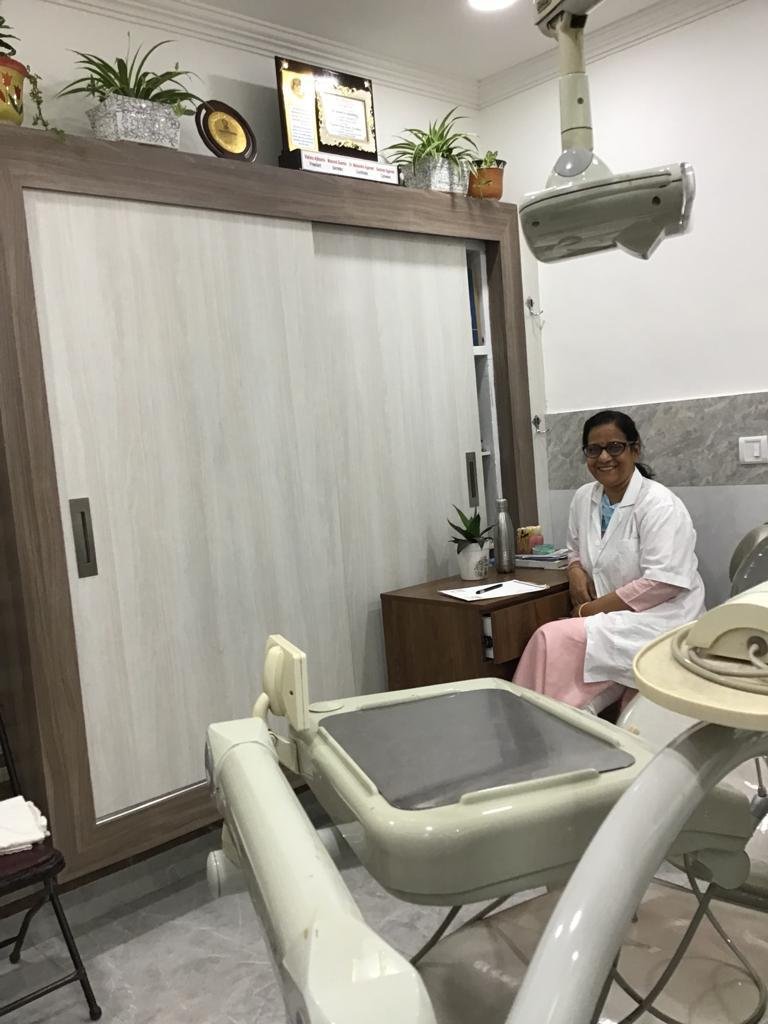
Reviewed and Medically Fact-Checked by Dr. Mamta Agarwal (MDS Oral & Maxillofacial Surgeon & Implantologist)
For individuals dealing with tooth loss, a dental implant stands as the absolute gold standard in modern restorative dentistry. Far superior to traditional slipping bridges or classic removable plates, a dental implant fuses permanently with your natural jawbone. This biocompatible structure functions exactly like a natural tooth root, preserving essential biting forces, preventing surrounding bone resorption (shrinkage), and maintaining natural facial volume. In Gorakhpur, the demand for implants has surged among patients seeking long-term, high-ticket dental restorations that eliminate the functional limitations of classic dentures.
However, understanding how dental implant costs are structured in local clinics can be highly complex. Realistic pricing varies based on implant engineering, clinical scanning technology, and bone-volume conditions. This medically reviewed guide breaks down standard local costs, material sciences, and sterilization protocols to assist you in planning your treatment safely.

Dental implant pricing is highly customized based on the number of missing teeth and the patient's underlying bone density. Premier clinics in Gorakhpur utilize a transparent cost structure categorized by implant complexity and globally certified brands:
| Implant Category & Brand | Engineering & Clinical Features | Local Gorakhpur Cost (INR) |
|---|---|---|
| Standard Implants (Osstem / Adin) | South Korean or Israeli sandblasted titanium. High success rates with micro-threaded stability. | ₹18,000 - ₹28,000 per unit |
| Premium Implants (Nobel Biocare / Straumann) | Hydrophilic active surfaces (SLA/TiUnite). Ideal for low bone density and rapid osseointegration. | ₹35,000 - ₹50,000 per unit |
| Immediate-Load Basal Implants | Single-piece strategic cortical implants. Restores complete teeth within 72 hours. | ₹15,000 - ₹22,000 per post |
| All-on-4 Full Arch Restoration | Complete toothless arch supported securely on 4 surgical posts with a fixed hybrid bridge. | ₹1,20,000 - ₹1,80,000 per arch |
| All-on-6 Full Arch Restoration | Complete toothless arch supported on 6 surgical posts + premium CAD/CAM zirconia bridge. | ₹1,80,000 - ₹2,80,000 per arch |
The core differences in implant pricing stem from extensive biochemical engineering. Budget-friendly brands like Osstem (South Korea) and Adin (Israel) utilize highly reliable medical grade 4 titanium with acid-etched surfaces, yielding over 95% clinical success in healthy bone. However, for compromised cases—such as patients with osteoporosis, severe bone shrinkage, or controlled diabetes—premium brands are critical. Nobel Biocare (Sweden/USA) features a patented TiUnite oxidized surface that promotes rapid blood clot formation and accelerates bone attachment. Similarly, Straumann (Switzerland) utilizes active SLActive surfaces that reduce the standard 3-month healing phase down to just 3 to 4 weeks. These premium systems ensure long-term stability and are back by lifetime global warranties.
Traditional implantology is a two-stage process. First, the titanium screw is surgically placed into the spongy cancellous bone. The patient must wait 3 to 6 months for the bone to grow tightly around the screw (osseointegration) before receiving their permanent crown. Conversely, Immediate-Load Basal Implants utilize the dense, highly mineralized cortical bone of the jaw, which never resorbs over time. Because basal implants anchor into this rigid cortical layer, they achieve immediate mechanical stability. This allows custom crowns or bridges to be permanently cemented within 72 hours of surgery, making them highly popular for elderly patients and those seeking rapid, full-mouth restorations without bone grafts.
To guarantee safety, premier clinics in Gorakhpur have retired manual two-dimensional dental X-rays for implant planning. Elite practices utilize CBCT (Cone Beam Computed Tomography) scans, which generate a comprehensive 3D digital model of your jawbone, sinuses, and nerve pathways. This allows the surgeon to measure exact bone thickness and plan the implant trajectory to avoid critical nerves. Furthermore, 3D intraoral digital scanners capture pristine visual maps of your bite, which are sent to CAD/CAM milling laboratories to manufacture custom dental crowns with sub-micron precision, eliminating human placement error.
When teeth have been missing for several years, the surrounding jawbone naturally shrinks due to a lack of chewing stimulation. If bone volume is insufficient to hold a standard titanium post, additional procedures are necessary. A Bone Graft utilizes sterile bone matrix particles to rebuild bone thickness, adding ₹8,000 to ₹15,000 to the cost. For upper back teeth, a Sinus Lift is performed to gently elevate the sinus membrane and insert bone graft material, providing a stable foundation for the implant and protecting the nasal sinus cavity.
Because implantology is an invasive surgical procedure, clinic sterilization standards are of paramount clinical importance. A standard boiling water sterilizer or simple Class N autoclave is completely inadequate. To prevent surgical infection, premier clinics implement hospital-grade Class B fractional pre-vacuum sterilization. Instruments are packed in sealed pouches and autoclaved under strict pressure. Efficacy is verified daily using Class 5 chemical indicators and weekly biological spore tests (using Geobacillus stearothermophilus incubator logs), registered under verified logs to guarantee absolute safety.